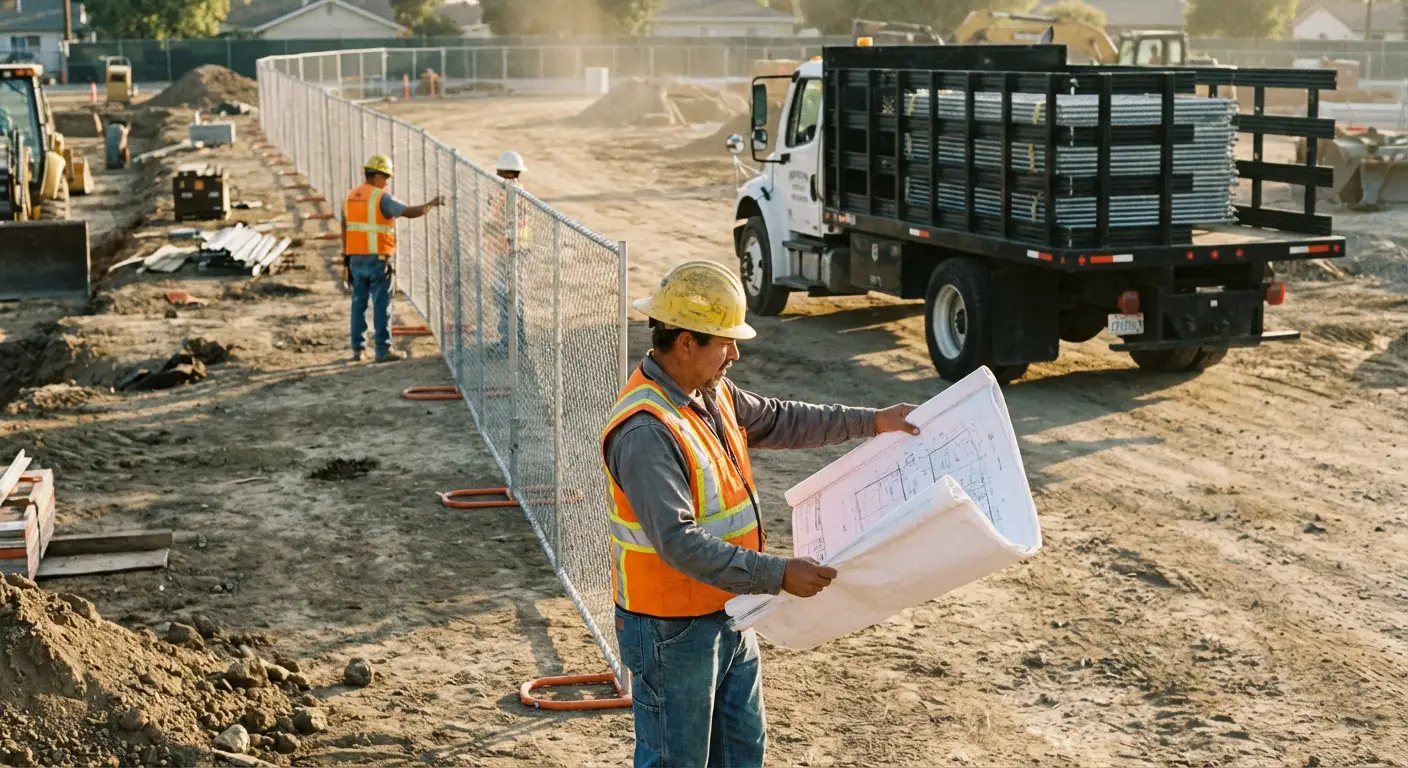
Post-driven temporary fencing uses driven posts to anchor a fence line where soil, pavement edges, and access routes change from block to block in Royal Oak, MI. On Downtown Royal Oak commercial sites, crews place posts to hold chain-link runs, keep walkways open, and preserve service access. In South of Downtown (SoDo), that setup helps when lot lines shift around older 1950_1980 dominant structures and utility cuts.
Simplified Explanation
Post-driven temporary fencing is a short-term fence system built around driven posts instead of a permanent base. In Royal Oak, MI, that setup fits Downtown Royal Oak commercial jobs, South of Downtown (SoDo) lots, and Grant Park edges where access changes during the work. It helps keep people out, mark work zones, and maintain paths for crews and deliveries.
Related Terminology
- Post-driven layout
:
- Post-driven layout means setting steel or wood posts into the ground before hanging chain-link panels along Downtown Royal Oak commercial frontage and SoDo job sites.
- Concrete footings
:
- Concrete footings lock posts in place near Grant Park edges, where foot traffic and winter thaw can loosen shallow fence lines.
- Temporary gate opening
:
- A temporary gate opening keeps carts, trades, and service access moving on projects near Downtown Royal Oak commercial entrances and Woodward-side lots.
- Wind load resistance
:
- Wind load resistance matters on exposed Royal Oak corners, where open blocks and parking lots near Downtown Royal Oak push panels harder than sheltered yards.
- Zero-trip hazard
:
- Zero-trip hazard setup keeps the fence base clear for pedestrians moving through South of Downtown and along the Downtown Royal Oak commercial corridor.
- Modular reconfiguration
:
- Modular reconfiguration lets crews shift fence runs around changing access needs on 1950_1980 dominant properties and tight lot lines in Grant Park.