
Royal Oak Root Zone Calculation for TPZ Fencing: Compliance Guide
Woodward Temp Fence specializes in precise Tree Protection Zone (TPZ) calculations for Royal Oak construction projects. Our local experts understand the unique challenges of post-war neighborhood developments, ensuring accurate root zone measurements that meet municipal compliance standards across Downtown Royal Oak and surrounding areas.
Root Zone Calculation for TPZ Fencing: Compliance Guide
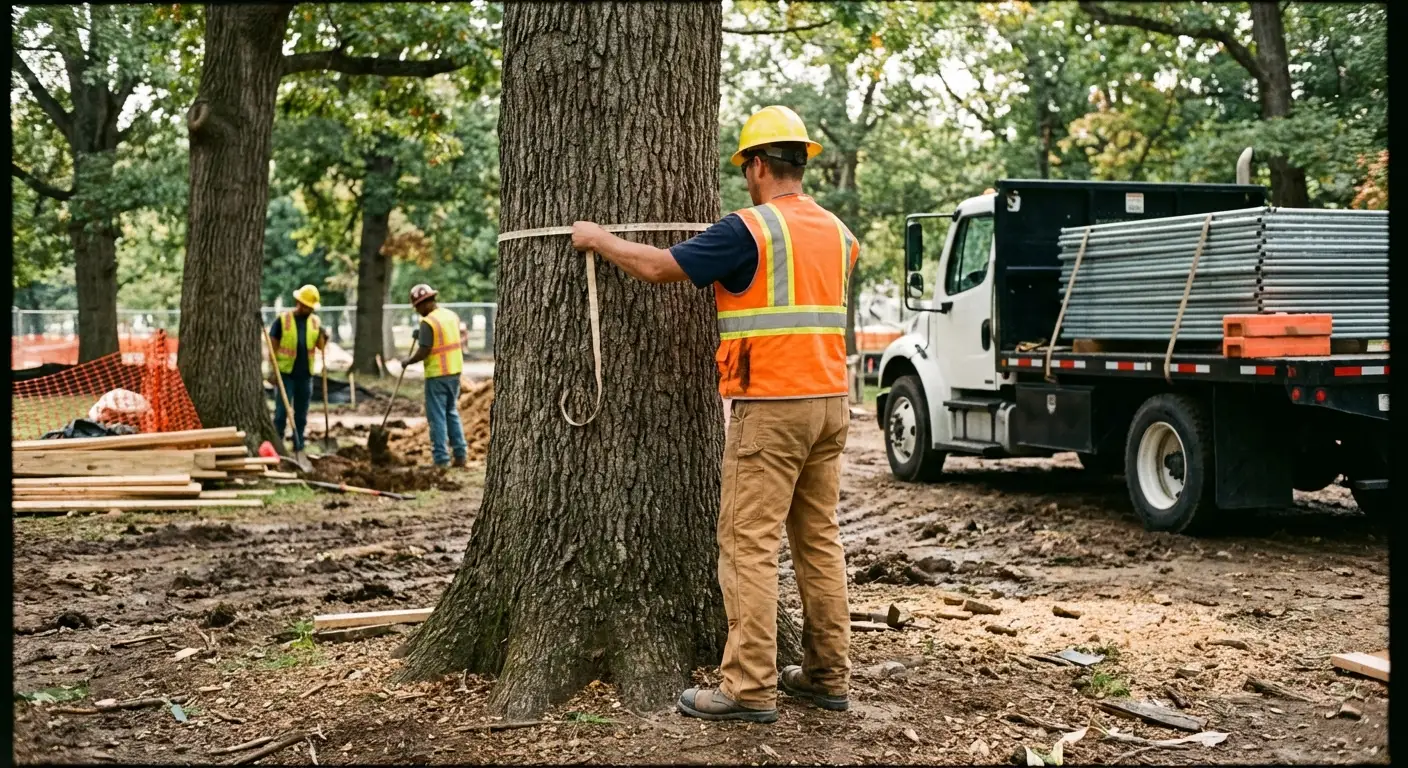
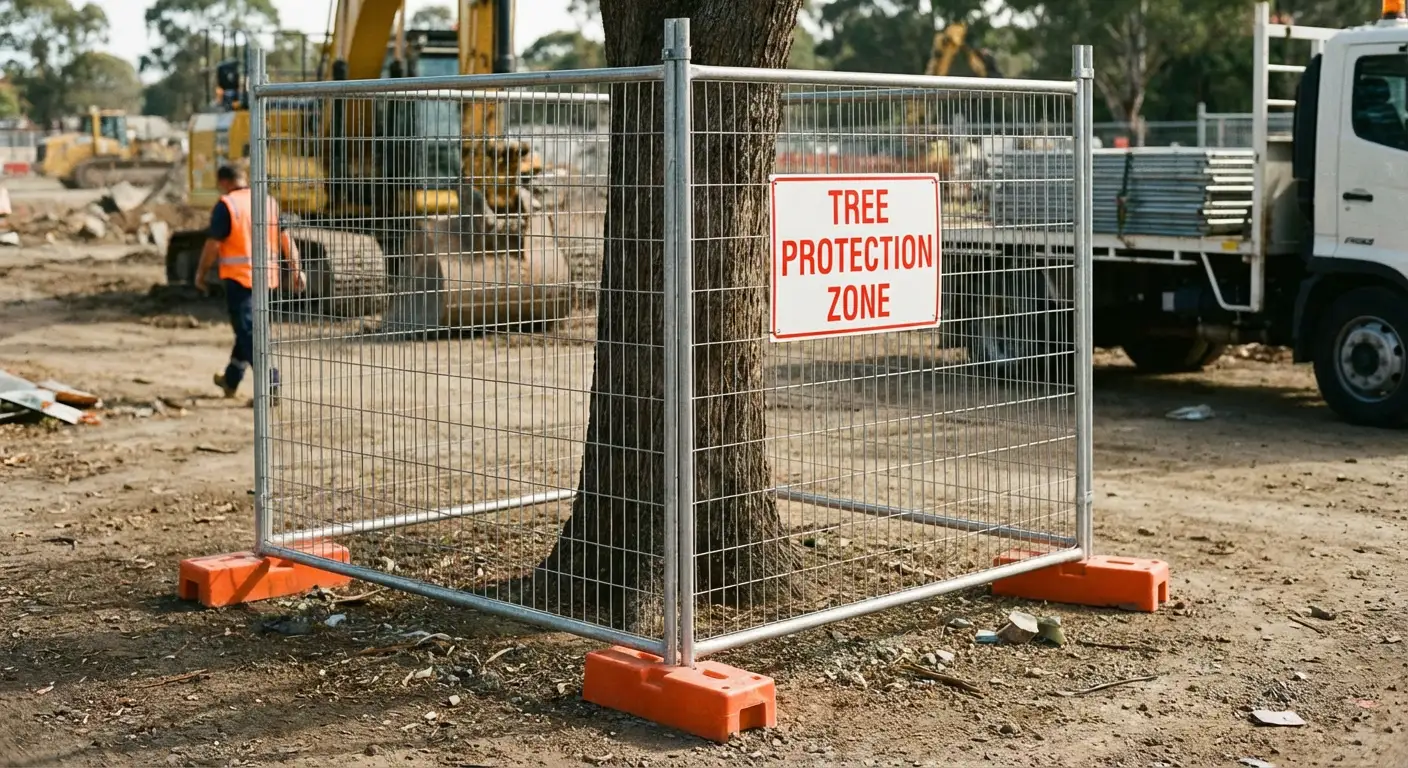
In Royal Oak, protecting tree root zones isn’t just good practice—it’s required by local ordinances. We start every TPZ job by measuring trunk diameter at breast height, then calculate the critical root zone using the standard 1.5-foot radius per inch of diameter. Downtown Royal Oak’s mature oaks often need wider buffers than younger trees in Grant Park. Our crew uses TPZ rental hardware with concrete-steel bases to avoid ground penetration. This keeps roots undisturbed while meeting tree protection ordinances and OSHA safety standards.
Calculation Steps
- Confirm tree species and trunk diameter to determine critical root zone
- Measure minimum 1.5 feet of clearance per inch of trunk diameter
- Verify local Royal Oak ordinances align with TPZ setup
| Trunk Diameter (inches) | Min. TPZ Radius (feet) | Royal Oak Compliance Zone |
|---|---|---|
| 6 | 9 | Grant Park |
| 10 | 15 | Grant Park |
| 14 | 21 | South of Downtown (SoDo) |
Root Zone Calculation for TPZ Fencing in Royal Oak
Root zone calculation for TPZ fencing starts with a trunk measurement taken at standard height, then the crew maps the protection radius before setting panels in Royal Oak. In Grant Park and the Lawson Park Area, that radius is checked against sidewalks, driveways, and tree wells so the fence does not pinch the root area. Around South of Downtown (SoDo) and the Royal Oak Music Theatre, crews also watch for staging space, gate swings, and emergency access.
Key Terminology
- root zone
- The soil area around a tree where feeder roots extend, used in Royal Oak’s Grant Park and Lawson Park Area to set TPZ fence radius.
- TPZ fencing
- Temporary protection fence placed around trees during work, keeping equipment out of the root zone near South of Downtown (SoDo) lots and curb repairs.
- critical root zone
- The minimum protected area tied to tree survival, often measured before footing work or trenching near Royal Oak Music Theatre access routes.
- tree protection zone
- Marked exclusion area using fencing, signage, and gates; in Royal Oak, it supports compliance around 1950_1980 residential blocks.
- dripline
- The ground line under the outer canopy edge, used as a field cue when survey stakes are missing in Grant Park backyards.
- root flare
- The point where trunk widens at grade; checking it helps crews size protection fencing without burying roots near Lawson Park Area trees.
In Simple Terms
Root zone calculation starts with the trunk size, then field crews confirm canopy spread, grade changes, and existing hardscape around the tree. In Royal Oak neighborhoods like Grant Park and South of Downtown (SoDo), the fence line has to leave room for workers, but not compress soil or scrape roots. Crews use the measured root protection radius to place TPZ fencing, then adjust for driveways, sidewalks, and utility access near the Royal Oak Music Theatre and 1950_1980 homes. The goal is to keep equipment, storage, and foot traffic outside the protected area while meeting local tree protection expectations.
Root Zone Calculation for TPZ Fencing: Compliance Guide — Part 2
This guide details root zone measurements and fencing standards to protect trees during construction in Royal Oak, MI.
| Root Protection Zone (RPZ) Radius | Typically 1.5 to 3 times the diameter of the tree trunk |
|---|---|
| Fence Setback Distance | Minimum 5 feet from the tree trunk to prevent root damage |
| Fence Height | Standard 6 feet for Temporary Protective Zone fencing |
| Material Requirements | Durable, weather-resistant mesh or chain link fencing |
| Compliance Standards | Meets OSHA and local Royal Oak municipal guidelines |
| Installation Cost Range | $200-$600 per week depending on site conditions |
| Signage Interval | Every 30 linear feet |
Royal Oak TPZ Fencing Compliance Guide
Ensure proper root zone calculations for fencing projects.
Common Root Zone Calculation Errors
I remember a job in Woodwardside where a crew ignored the drip line. They ended up with dead trees and a massive headache from the city inspectors.
Guessing the drip line radius
We've seen crews set up tree protection zones too narrow, leaving critical roots exposed to heavy machinery. This leads to root death and massive fines from inspectors during site audits.
Measure the drip line accurately or use the trunk diameter multiplier to ensure full coverage.
Ignoring soil compaction limits
Heavy equipment driving inside the calculated zone crushes the air pockets roots need to breathe. Even if the fence looks fine, the tree's health declines rapidly behind the chain link panels.
Install zero trip hazard barriers to keep workers and machines strictly outside the root zone.
Using heavy stake-driven posts
Driving metal stakes into the ground for temporary gates can sever major structural roots. We've repaired fences where a single misplaced stake killed a mature tree in the Lawson Park Area.
Use weighted bases or surface-mounted systems to avoid penetrating the ground entirely.
Misinterpreting local ordinances
Every project in Grant Park follows specific tree protection ordinances. Ignoring these nuances causes project shutdowns and expensive legal headaches for the property owner.
Review the specific city guidelines before placing any rentals on the job site.
Neglecting seasonal root expansion
Roots grow and shift based on moisture levels. A zone calculated during a dry summer might fail during a wet spring, leading to improper safety standards compliance during inspections.
Calculate the zone based on the widest possible root spread to account for seasonal changes.
Root Zone Calculation for TPZ Fencing: Compliance Guide — Part 3
Protecting tree root zones during fencing installation in Royal Oak demands precise calculation and respect for the natural environment. We focus on measuring the Tree Protection Zone (TPZ) accurately to avoid damage to roots, ensuring the stability and health of trees while meeting local ordinances. Our approach balances safety, compliance, and practical installation techniques to minimize disruption near sensitive areas like Tenhave Woods and established neighborhoods.
-
Accurate Measurement of Tree Protection Zones
We use precise tools to measure the TPZ radius based on tree species and size, following Royal Oak’s guidelines to avoid root injury during fence placement.In PracticeFor a mature oak near Grant Park, we calculated a 15-foot radius TPZ, keeping fencing posts outside that boundary to protect critical roots.
-
Non-Invasive Installation Techniques
Our crew avoids digging or heavy machinery within the TPZ, using above-ground base options to preserve root health and soil stability.In PracticeAt a site near Downtown Royal Oak, we installed concrete bases instead of post-driven fencing to protect tree roots.
-
Compliance with Local Tree Protection Ordinances
We follow Royal Oak’s tree protection rules strictly, ensuring all fencing work aligns with municipal requirements and environmental best practices.In PracticeDuring a South of Downtown (SoDo) project, we documented TPZ compliance thoroughly to meet city inspection standards without delays.
-
Regular Monitoring and Adjustment
Our team inspects fencing around TPZs regularly to adjust positioning if needed, preventing accidental encroachment or damage from shifting materials.In PracticeAfter heavy rain near Tenhave Woods, we checked and re-secured fences to maintain TPZ integrity and tree safety.
We take root zone calculation seriously, combining expert surveying with practical fencing solutions that protect trees and meet Royal Oak standards. Our team stays current with local regulations and applies hands-on experience to prevent root damage during temporary fence installation. We get it up fast, so you can get back to feeling secure without compromising environmental care.
Root Zone Calculation for TPZ Fencing: Compliance Guide — Part 4
Answers to common questions about Royal Oak’s TPZ fencing root zone requirements.
What is the root zone calculation method used in Woodwardside?
For Woodwardside, Royal Oak uses a standard multiplier based on trunk diameter to determine TPZ fencing distance from trees.
How does Downtown Royal Oak regulate TPZ fencing near the Farmers Market?
Near the Royal Oak Farmers Market, TPZ fencing must extend 1.5 times the tree’s drip line to protect roots.
Are there specific TPZ rules for Grant Park’s older trees?
Grant Park requires TPZ fencing to follow DEQ guidelines, with adjustments for mature trees common in post-war neighborhoods.
What happens if TPZ fencing in Royal Oak violates local rules?
Non-compliant TPZ fencing in Royal Oak may trigger city inspections and require immediate adjustment to meet ordinance standards.
Does Woodward Temp Fence handle root zone calculations for clients?
Woodward Temp Fence assesses root zones using Royal Oak’s guidelines before installing TPZ fencing in designated areas.
How do 1950-1980 buildings affect TPZ fencing placement?
Around 1950-1980 buildings, TPZ fencing must account for shallow foundations and existing root systems from period landscaping.
Accurate Root Zone Calculation for Temporary Fencing
Technical guidance for precise temporary fence placement ensuring site safety and regulatory compliance in southeastern Michigan construction zones.
OSHA-aligned technical expertise serving Royal Oak construction industry professionals